
"coffee seed structure"
800 article(s) found
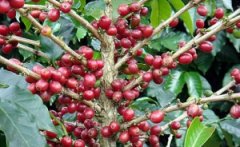
[coffee encyclopedia] from seeds to cups
I originally wanted to write an article called from seed to cup, but later I found that there were too many articles in the coffee. Also, a small red fruit for several years, the harvest and processing of farmers, across the ocean. The fine processing distributed to local bakers and the careful cooking of baristas is a story in itself. Let's talk about coffee beans in the first season, from our cup.

The difference between the specification of coffee beans and grade washing / non-washing
a. Washing type / non-washing type: in the sink, after rubbing with water and utensils, the pulp and gum are removed and dried, which is called washed coffee beans with uniform quality. Non-washing type: after the sun is naturally dried, the pulp and peel is removed by a sheller, and its quality is unstable. b. The fruit of flat bean / round bean coffee is made up of two oval seeds opposite each other. The connected side

Introduction of boutique coffee with characteristics of varieties, flavor and taste in Burundian coffee producing area
There are two major ethnic groups in Burundi, and only about 15 percent of the Tutsi have ruled the country since the 16th century, controlling the civilian population, which is mainly made up of Hutu, plus a very small number of indigenous Twa. This abnormal social structure in which ethnic minorities occupy a high position has buried the evil seed of national instability, and in 1

Introduction to the flavor and taste of Burundian boutique coffee beans in the manor producing area
Plus the very rare aboriginal Twa. This abnormal social structure occupied by ethnic minorities planted the evil seed of national instability and reached its peak in October 1993. Just four months after taking office, Melchior Ndadaye, Burundi's first ever Hutu head of state and the first democratically elected president, was attacked.

Burundian Coffee with strong Flavor: an introduction to the Fine Coffee Manor in the producing area
There are two major ethnic groups in Burundi, and only about 15 percent of the Tutsi have ruled the country since the 16th century, controlling the civilian population, which is mainly made up of Hutu, plus a very small number of indigenous Twa. This abnormal social structure in which ethnic minorities occupy a high position has buried the evil seed of national instability, and in 1

Introduction to the flavor and taste of Burundian boutique coffee beans with a spicy aftertaste
There are two major ethnic groups in Burundi, and only about 15 percent of the Tutsi have ruled the country since the 16th century, controlling the civilian population, which is mainly made up of Hutu, plus a very small number of indigenous Twa. This abnormal social structure in which ethnic minorities occupy a high position has buried the evil seed of national instability, and in 1

Botanical characteristics of small seed Coffee
Coffee is a shallow root crop, and the plants propagated by seeds are conic roots. From the point of view of varieties, the roots of small and medium grain species are shallow, while those of large grain species are deeper. Yunnan small grain coffee is a 3-year-old 4-year-old fruit tree with a deep main root of about 70cm.

Introduction to fine coffee with mellow taste and taste in Burundian coffee manor
There are two major ethnic groups in Burundi, and only about 15 percent of the Tutsi have ruled the country since the 16th century, controlling the civilian population, which is mainly made up of Hutu, plus a very small number of indigenous Twa. This abnormal social structure in which ethnic minorities occupy a high position has buried the evil seed of national instability, and in 1

Why do coffee beans produce oil? roast coffee beans? what do you mean by two explosions? how to judge the tipping point?
Roasting coffee beans is really a magical thing: throw some humble green seeds into a hot environment, and in less than 15 minutes (or about), they will become magical beans, grind and add some hot water to become a delicious and healthy coffee drink. If we think about it carefully, we will know that a lot of changes have taken place inside the coffee beans in this process. Although there is a promise

The basic knowledge of Coffee-Coffee growth habits
Coffee trees belong to the evergreen family of Akanaceae. They are tropical plants that are not cold. Most of them are planted in areas with elevations of 300,400m, and also in highlands with elevations of 2000-2500 meters. But those who plant on slopes above 1500 meters above sea level have better quality. Coffee trees are most suitable for growth when the average temperature is about 20 degrees Celsius, the annual precipitation is 1500-2000 mm, and the soil is permeable.

Coffee fruit to seed process-coffee fruit decomposition diagram
Coffee fruit to seed process-Coffee fruit decomposition map from harvest to delivery after the harvest of the fruit, the skin and pulp. The endocarp and silver peel are removed to form coffee beans. There are two kinds of methods: drying (natural drying, non-washing) and washing. Dry type, easy to operate, spread the harvested fruit on the dry ground, bask in the sun for a week or two, and you can hear it when you turn it.

Yemeni mocha-Coffee Solar treatment process characteristics of Coffee Solar treatment
Professional coffee knowledge exchange more coffee bean information Please pay attention to coffee workshop (Wechat official account cafe_style) Coffee fruit actually after harvest, after a series of complex processing procedures, and finally after roasting, it will become the coffee ripe beans you see. Although many people have drunk coffee, they don't know what the coffee fruit looks like. The fruit picked from the coffee tree
Talking about Coffee beans
1. Summary: coffee is a perennial evergreen shrub or small tree of Rubiaceae. It is native to tropical Africa and has been cultivated for more than 2000 years. The Arabs began to grow coffee in 525 BC, and it was popular for Arabs to stir-fry coffee beans. They began to grow coffee beans on a large scale after the 15th century, and were widely distributed in the tropics and subtropics of Europe, Asia, Africa and Latin America after the 18th century.

Burundian coffee flavor with spicy aftertaste introduction to boutique coffee beans in manor production area
There are two major ethnic groups in Burundi, and only about 15 percent of the Tutsi have ruled the country since the 16th century, controlling the civilian population, which is mainly made up of Hutu, plus a very small number of indigenous Twa. This abnormal social structure in which ethnic minorities occupy a high position has buried the evil seed of national instability, and in 1
Coffee roasting and Coffee Flavor Wheel New version of Coffee Flavor Wheel
The deep roasting of counter-cultural coffee flavor wheel highlights that light roasting of wood incense can highlight the bright smell of sour flowers, grasses and fruits, but hopeless deep roasting fans fall in love with resin components such as incense, smelling, choking aroma and alcohol odor. this is the product of Mena reaction and distillation. Resin composition: pine and cypress families of Pinaceae and Taxodiaceae, both secrete oleoresin with spicy fragrance to protect against insect pests or

What are the characteristics of four common coffee treatments: sun exposure, water washing, semi-washing and honey treatment?
Before we talk about these treatments, let's introduce the structure of coffee berries. From the outside to the inside, they are exocarp, mesocarp, pectin layer, endocarp, silver skin and seed. Sheep skin often refers to endocarp. The coffee beans we buy for roasting usually have silver skins instead of sheep skins. The coffee in the initial processing method is parchment coffee beans, which are determined to be
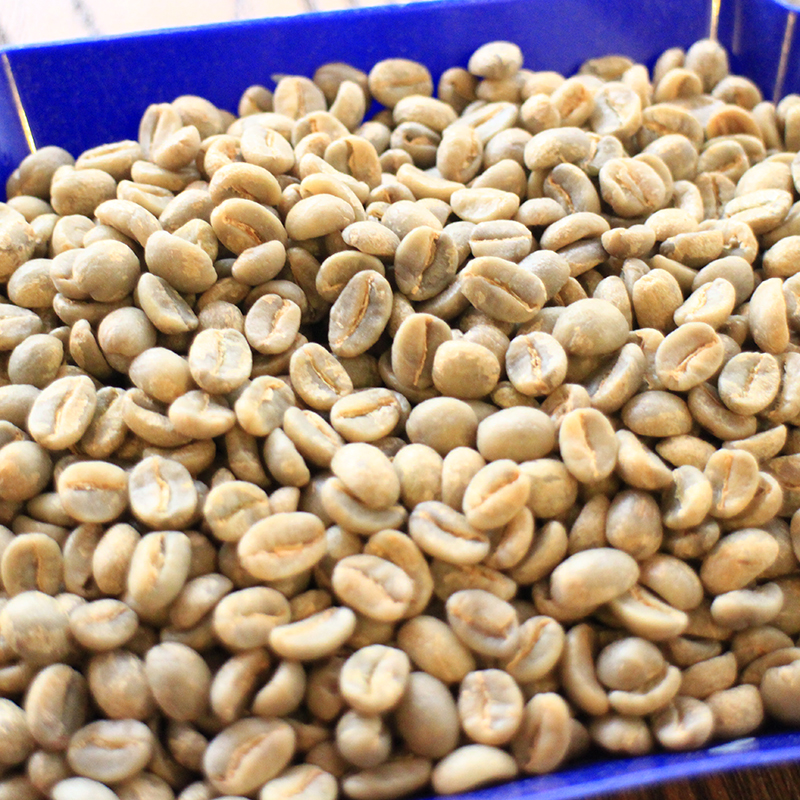
How do coffee bean seeds grow coffee what kind of beans is Guatemala? Coffee net
Guatemalan coffee, produced in Guatemala, belongs to bourbon coffee beans, is one of the more sour varieties, mellow and slightly wild taste, the most suitable for blending coffee. The characteristics of Guatemalan coffee beans Guatemala extremely hard beans are elegant and sour, clean and odorless, layered, as well as green apple acid, berry, jasmine, orange peel and green pepper.
A brief talk on understanding coffee beans
1. Summary: coffee is a perennial evergreen shrub or small tree of Rubiaceae. It is native to tropical Africa and has been cultivated for more than 2000 years. The Arabs began to grow coffee in 525 BC, and it was popular for Arabs to stir-fry coffee beans. They began to grow coffee beans on a large scale after the 15th century, and were widely distributed in the tropics and subtropics of Europe, Asia, Africa and Latin America after the 18th century.

The various parts of the coffee plant decompose the shallow root crop of coffee.
Coffee is a shallow root crop, and the plants propagated with seeds have conical roots. Root system refers to the general name of root. The root morphological distribution and depth of shade varieties / soil conditions and agricultural technical measures are different. From the point of view of varieties, the roots of small / medium grain species are shallower, while those of large grain species are deeper. Under normal circumstances, there is a thick and short taproot and many well-developed lateral roots. Yunnan small-grain coffee has a 4-year-old fruit.

Understand the growth process of a coffee from a coffee seed to a coffee tree!
Professional coffee knowledge exchange more coffee bean information please follow the coffee workshop (Wechat official account cafe_style) then today the editor will popularize science for you, the growth process of a coffee from coffee seed to coffee tree! It usually takes 4 to 5 years for coffee trees to grow from seed to germination to grow into a tree and then to blossom for the first time. From the moment the seed is sown to the soil